Phytomem One Review (2026)
TPBy the TrustedPurchaseReview Editorial Team
Disclosure: this page contains affiliate links. If you buy through them, we may earn a commission at no extra cost to you. Learn more.
Our verdict: 5.0/10
Phytomem One is a real product sold through BuyGoods, and its full label is public. That label tells a different story from the sales page. Most of the ingredients are blood sugar ingredients, the first one listed is xylitol, a sweetener, and berberine, the ingredient the sales page leans on most, is listed last. It is a dietary supplement. It does not remove microplastics from the brain, and it does not treat memory loss or dementia.
Read this first if you take diabetes medication
Phytomem One contains berberine, cinnamon and banaba, all promoted for blood sugar. Berberine can interact with diabetes drugs and many other medicines. If you take metformin, insulin or another glucose lowering drug, a blood thinner or heart medication, talk to your doctor before taking it. And if memory problems are new or getting worse, see a doctor: some causes can be treated.
About the ads and lookalike sites
Security site MalwareTips rates Phytomem One as high caution: the main domain is new, several lookalike domains copy the name, and the microplastic story has no product level evidence. Check the address bar before you pay, ignore sites that only copy the name, and order only from the official site linked on this page.
Phytomem One is sold with a long story about microplastics, “Type 3 Diabetes” and a “Dual Defense System”. We read the official sales page, the label image, the refund and shipping policies and the references the brand lists. We did not buy or test the product. Here is what those pages say, and where they disagree with each other.
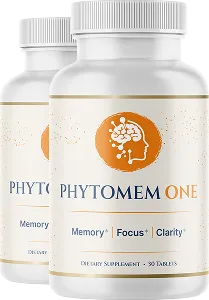
What Is Phytomem One?
Phytomem One is a supplement sold for memory, focus and clarity. According to the label, each bottle holds 30 chewable tablets, and the suggested use is one tablet a day. The sales page FAQ says “one capsule daily with food”, which does not match the label.
The label says the product is distributed for Phyto Thrive Labs in Largo, Florida. BuyGoods is the retailer and runs the checkout, and the sales page says the product is only sold through that page.
The Microplastics Story: What Holds Up
The sales page says Phytomem One targets memory loss “at its root” through two problems it calls the “Plastic Stranglehold” and “Type 3 Diabetes”. Here is how those ideas compare with what is known.
- Microplastics in the brain. The brand’s reference list includes a 2025 study in Nature Medicine that found microplastic particles in human brain tissue. That study did not test any supplement. We found no study showing that any ingredient in this formula removes microplastics from the brain, which is what the sales page FAQ says the product does.
- “Type 3 Diabetes”. Some researchers use this phrase for the link between insulin resistance and Alzheimer’s disease. It is not an official diagnosis, and no supplement is approved to treat it.
- “Dr. Nakamura”. One bonus e-book is described as “developed by Dr. Nakamura himself”. The page gives no full name, credentials or affiliation.
- The visuals. The page’s own footer says the visuals in the video “may feature recreated or AI-assisted representations” and are not necessarily real people, customers or medical professionals.
None of this means the tablets are harmful. It means the sales story is much bigger than what the evidence supports, so the label is the part worth reading.
Ingredients: What the Label Shows
The full label, including the Supplement Facts panel, is shown below. Compare it with your bottle when it arrives.
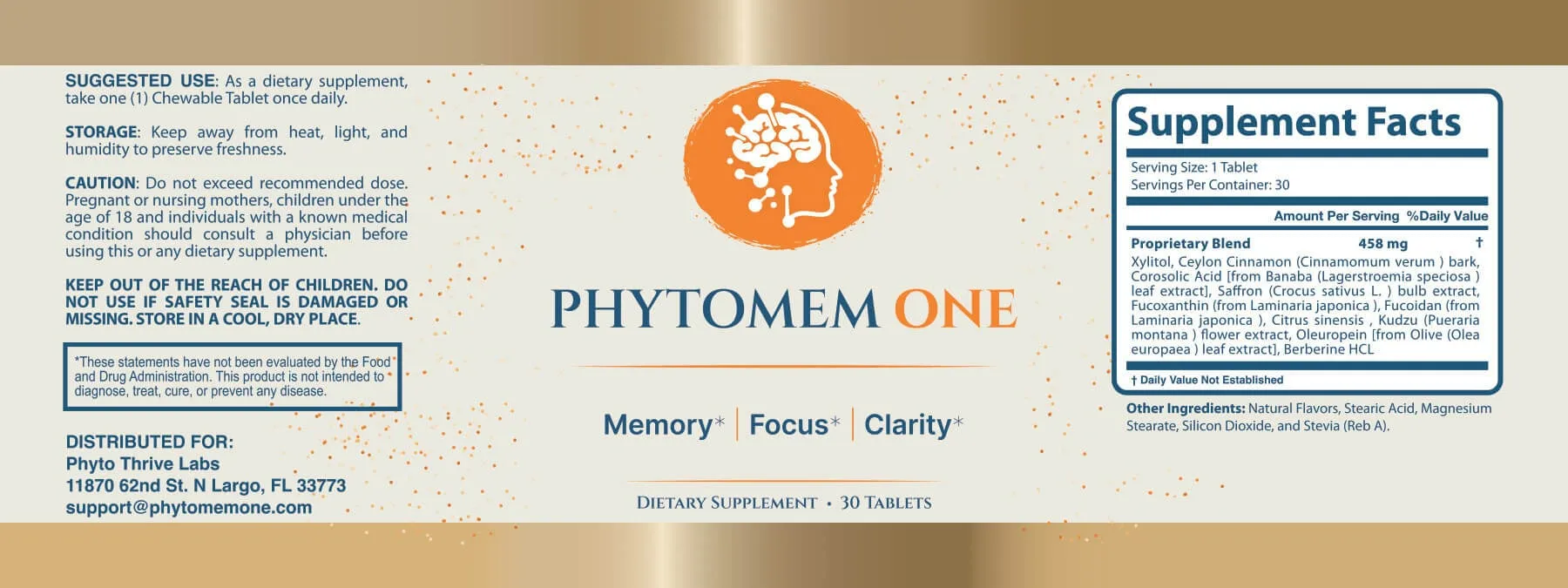 The Phytomem One label, as provided for the product.
Each tablet contains one proprietary blend of 458 mg with ten ingredients, and no individual amounts. Here they are in label order.
| Ingredient (label order) | What it is | What research uses |
|---|---|---|
| 1. Xylitol | A sugar alcohol used as a sweetener in chewable products. | Not a memory ingredient |
| 2. Ceylon cinnamon bark | Spice promoted for blood sugar. NIH says research does not clearly support cinnamon for any health condition. | Unclear. NIH notes studies often do not say which species was tested |
| 3. Corosolic acid (banaba leaf) | Plant compound promoted for blood sugar. | No established amount |
| 4. Saffron bulb extract | The label says bulb. Saffron research mostly uses the stigma or petal, which are different parts of the plant. | 20 to 30 mg a day of stigma or petal extract in depression studies |
| 5. Fucoxanthin (kelp) | Pigment from brown seaweed. | No established amount |
| 6. Fucoidan (kelp) | Fiber like compound from brown seaweed. | No established amount |
| 7. Citrus sinensis | Orange. The sales page calls it Morosil, a red orange extract. The label just says Citrus sinensis. | No amount stated |
| 8. Kudzu flower extract | Flower of a vine used in traditional Chinese medicine. | No established amount |
| 9. Oleuropein (olive leaf) | Compound from olive leaves. | No established amount |
| 10. Berberine HCl | Plant compound with some evidence of a modest effect on blood sugar in type 2 diabetes, according to NIH. | About 500 mg two or three times a day in clinical studies |
Other ingredients: natural flavors, stearic acid, magnesium stearate, silicon dioxide and stevia.
Look at the list as a whole. Cinnamon, banaba, kudzu, olive leaf and berberine are all marketed for blood sugar. Saffron is the only one with real research on mood and cognition, and the label uses a different part of the plant. This is closer to a blood sugar formula than a memory formula.
What the Ingredient Order Tells You
The label hides the amounts, but it cannot hide the order. FDA rules require the ingredients in a proprietary blend to be listed in descending order of weight. So the first ingredient is the largest and the last one is the smallest. We explain this rule, and the math behind it, in our proprietary blend guide.
- Xylitol is first. The largest single ingredient in this “brain” formula is a sweetener.
- Berberine is last. With ten ingredients sharing 458 mg, the last one cannot be more than about 46 mg. Clinical studies of berberine used about 500 mg two or three times a day. That puts this tablet at, at most, under 5% of a typical daily study dose.
The sales page calls berberine the ingredient that restores “your brain cells’ ability to absorb glucose”. At this position on the label, there is very little of it. Our berberine dosage guide shows the amounts used in studies. For comparison, FIMAVYN is one of the few products that prints its berberine dose: 100 mg per serving.
For comparison, our NeuroMind Pro review covers another memory supplement that also hides its amounts in a proprietary blend, in that case alongside high doses of B vitamins and huperzine A. For a side by side look, see NeuroMind Pro vs Phytomem One.
Pricing: What You Will Actually Pay
| Package | Per bottle | Total | Shipping |
|---|---|---|---|
| 2 bottles | $79 | $158 | Small fee, amount not shown on the page |
| 3 bottles | $59 | $177 | Free (US) |
| 6 bottles | $49 | $294 | Free (US) |
Prices checked on the official sales page on October 9, 2026. The 3 bottle package costs only $19 more than the 2 bottle one, which is the pricing nudge here.
You cannot buy one bottle. The sales page says there are no recurring charges, and the charge appears on your statement as BuyGoods.
Guarantee and Refund Terms
| Page | What it says |
|---|---|
| Sales page | 60 day money back guarantee, “simple and hassle free”. |
| Refund policy | 60 days after you receive the order. Send back all items to the warehouse in Largo, Florida. Full refund minus any shipping fees. You pay return shipping. |
The two pages do not conflict, but the policy page adds the costs the sales page leaves out: the original shipping fee is not refunded, and the return shipping is on you. Keep every bottle, even empty ones.
Phytomem One Reviews and Complaints: What We Found
- Most “reviews” in search results are paid press releases or affiliate pages, many of them repeating the microplastics story.
- Amazon shows a listing under the Phytomem One name, while the sales page says the product is only sold on its own page. We could not confirm who sells that listing.
- The testimonials on the sales page use first names and states only, and the footer says names were changed and results are not typical.
If you bought Phytomem One, tell us how delivery and the refund process went. We will update this page.
Safety and Who Should Avoid It
The label tells pregnant or nursing women, anyone under 18 and people with a known medical condition to consult a physician first. Talk to your doctor before using it if you:
- take metformin, insulin or another diabetes medication
- take blood pressure, heart or cholesterol medicine, a blood thinner such as warfarin, or a drug with a narrow safety margin
- are pregnant or breastfeeding, since NIH says berberine should not be used then
- have a bleeding disorder, because of the saffron
One practical warning. Xylitol is the first ingredient, and the FDA warns that xylitol is dangerous for dogs. Keep the bottle out of reach of pets.
These statements have not been evaluated by the FDA. Like all dietary supplements, Phytomem One is not intended to diagnose, treat, cure or prevent any disease.
Pros and Cons
✅ What we liked
- Sold through BuyGoods, a retailer you can identify
- The full label is public, so you can check it before buying
- One time purchase, no subscription
- Free US shipping on 3 and 6 bottle orders
❌ What we did not
- Sales story about microplastics with no supporting study of the product
- Mostly blood sugar ingredients in a “memory” product
- Xylitol, a sweetener, is the largest ingredient
- Berberine is the smallest, far below studied amounts
- Saffron from the bulb, not the parts used in research
- Tablet or capsule? The label and the FAQ disagree
- Refund excludes shipping, and you pay the return
FAQ
Is Phytomem One legit?
Does Phytomem One remove microplastics from the brain?
What is in Phytomem One?
How much berberine is in it?
Can I take it with diabetes medication?
How much does Phytomem One cost?
What is the refund policy?
Is it a tablet or a capsule?
Sources
- Official Phytomem One sales page, refund policy, shipping policy, contact page and reference list. Checked October 9, 2026.
- Phytomem One label image with the Supplement Facts panel. We have not examined a physical bottle.
- Code of Federal Regulations, 21 CFR 101.36, on how proprietary blends must be listed.
- NIH National Center for Complementary and Integrative Health: In the News: Berberine and Cinnamon.
- Drugs.com: What is berberine used for? and the professional monograph for saffron.
- FDA, Paws Off Xylitol; It’s Dangerous for Dogs.
- Nihart AJ, et al. Bioaccumulation of microplastics in decedent human brains, Nature Medicine (2025).
Final Verdict: 5.0/10
Phytomem One gets credit for publishing its full label. That label is also what pulls the score down. Behind a story about microplastics and “Type 3 Diabetes”, the tablet is mostly a small blend of blood sugar ingredients, led by a sweetener, with the headline ingredient listed last. The refund policy also keeps the shipping costs on the buyer.
Who might still try it: healthy adults who are curious, take no prescription medication, and accept that the amounts are small and unknown. Choose the 3 bottle package only if you were going to buy more than one round anyway.
Who should skip it: anyone looking for a treatment for memory loss or dementia, anyone on diabetes, heart or blood thinning medication without a doctor’s go ahead, and anyone who is pregnant or breastfeeding.
Our verdict: 5.0/10. Read the label, not the story.
Check Phytomem One Availability60 day guarantee advertised · Read the refund terms first
About the review team
Written by the TrustedPurchaseReview editorial team. We read the official label information and sales pages, check ingredients against published research and look for public customer feedback. We do not buy or test the products ourselves. We earn affiliate commissions on some links, and ratings are not for sale.
Questions or corrections? Contact us.
Disclosure: this page contains affiliate links. If you buy through them, TrustedPurchaseReview may earn a commission at no extra cost to you. Ratings are our own. This article is informational and not medical advice.